When building a watercolor palette, most artists focus on hue — warm vs cool, yellow vs blue.
But there’s another property that can completely change the way your painting looks:
Granulation.
In this article, we’re going to explore what granulating greens do, how they behave, and how to choose the right one for your work.
What Is Granulation?
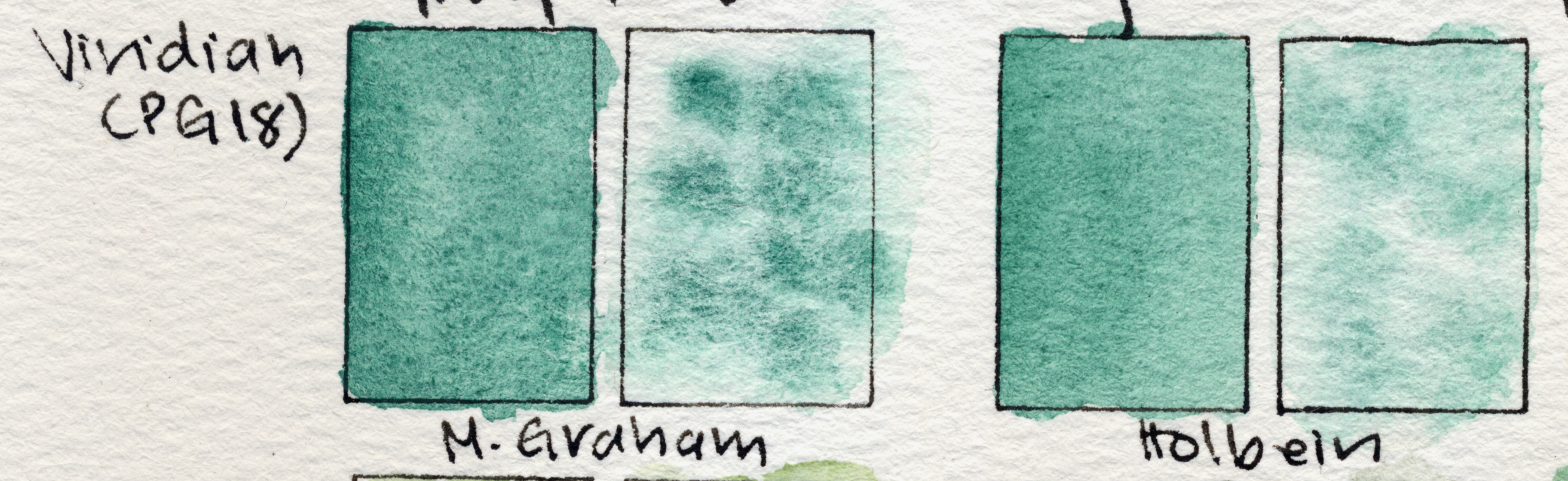
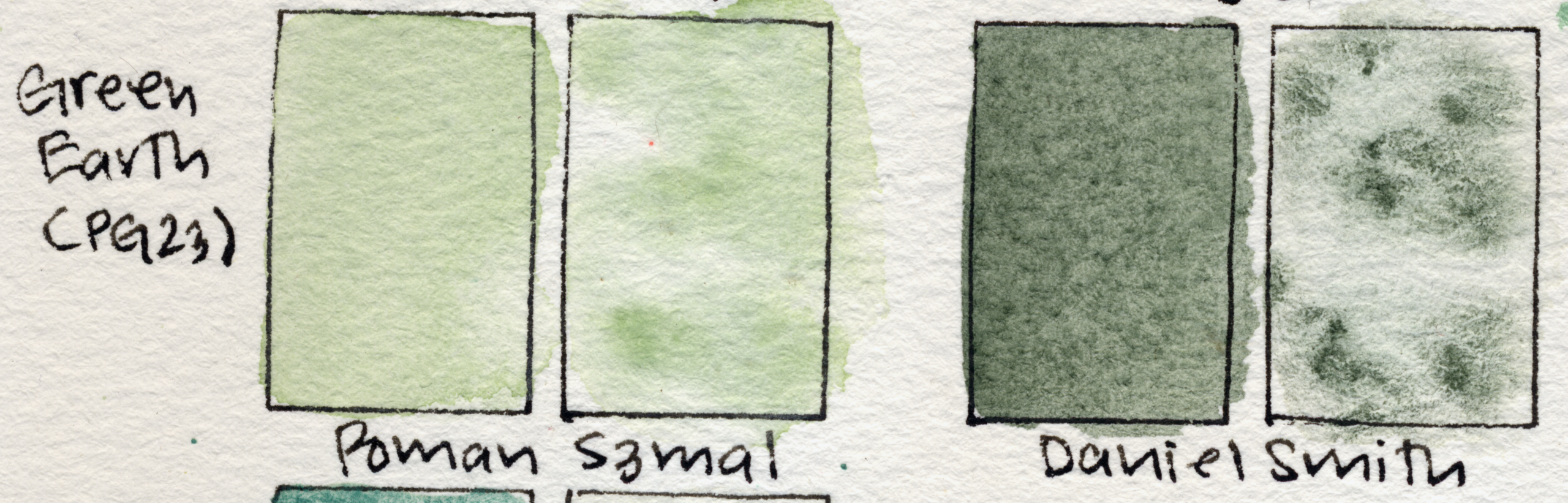
Granulation is the tendency of pigment particles to separate and settle unevenly as the paint dries.
Instead of forming a smooth, even wash, granulating pigments create visible texture — tiny variations in value and color across the surface of the paper. This happens because:
-
Pigment particles are larger or heavier
-
They settle into the valleys of textured paper
-
Water movement carries particles unevenly
The result is a wash that feels organic and alive, rather than flat. Granulation is not just a visual effect! It’s a physical behavior of the pigment.

Why Use Granulating Greens?
Green is one of the most complex colors in painting — especially in landscapes, and so I have strong feelings about the “best” greens. Flat, smooth greens are great, but are so smooth that they can often feel artificial or uniform, and they can take your viewer out of the experience, which is not ideal unless that is your intention. Granulating greens solve this problem naturally.
They:
-
Break up large washes
-
Add visual interest without extra intentional detail
-
Suggest foliage texture automatically
-
Create more complex, natural-looking color
You see this a lot when painters use granualting blues for the sky – your eye can’t detect any specific granulation details, but perceives micro-changes that add depth to a wash. In many cases, a granulating green can do the work for you, especially when painting trees, grass, or distant landscape elements. Granulating greens paint texture — not just color. This is especially magical when you start mixing in other granulating pigments – in fact, that is usually the trick that brands use when making super-granulating paints!

The Pigments We’re Comparing
In this study, we’ll look at six common granulating green pigments:
-
PG50 — Cobalt Green (Cobalt Titanate Green)
-
PG17 — Chromium Oxide Green
-
PG26 — Cobalt Green Deep (Cobalt Chromite Green)
-
PG19 — Cobalt Green Pale
-
PG18 — Viridian
- PG23 – Green Earth
Each of these behaves differently in terms of:
-
Granulation strength
-
Transparency
-
Tinting strength
Understanding these differences is key to choosing the right one.
To compare these pigments, it’s helpful to look at:
-
Mass tone (full strength)
-
Diluted wash
-
Granulation pattern
-
Mixing behavior
While all of these are “granulating greens,” they fall into two distinct groups.
Group 1: Low Tinting, Transparent Greens
PG18 (Viridian)
PG23 (Green Earth)
PG19 (Cobalt Green Pale)
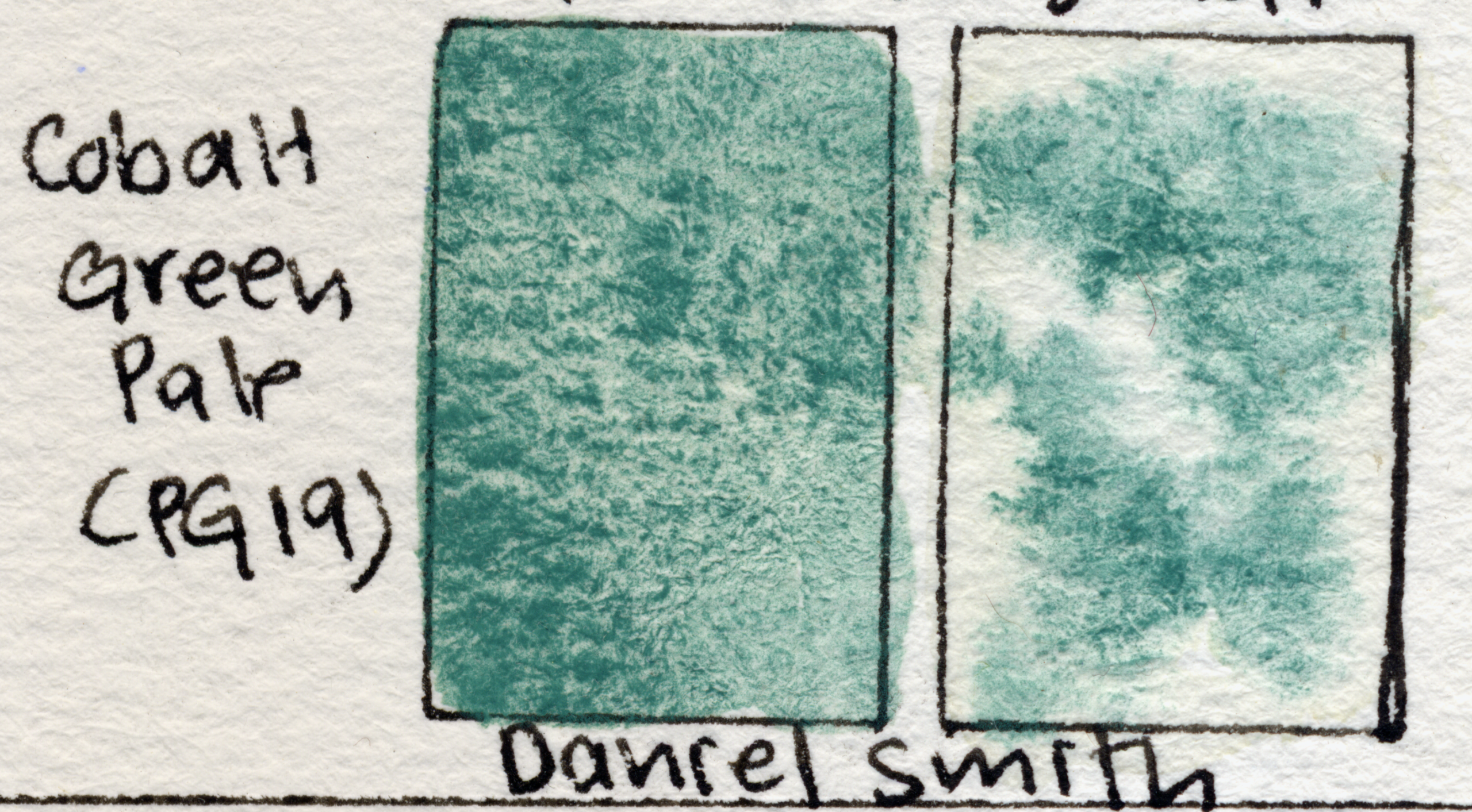
These greens are:
-
Lower in tinting strength
-
More transparent
-
More subtle in granulation
They don’t dominate mixtures, but rather tend to shift the color gently and add subtle texture.
Best Uses
-
Water and ocean scenes
-
Atmospheric effects
-
Soft landscape passages
-
Portraits
These pigments are surprisingly useful for skin tones because they can cool and neutralize color without overpowering it.
Group 2: Dense, Opaque, Granulating Greens
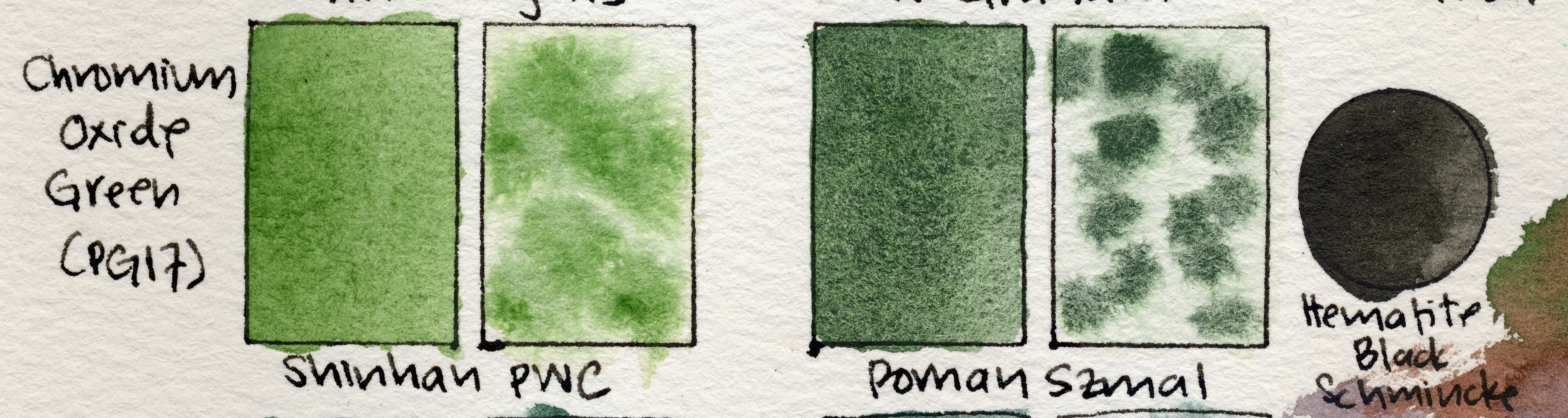
PG17 (Chromium Oxide Green)
PG50 (Cobalt Green)

PG26 (Cobalt Green Deep)
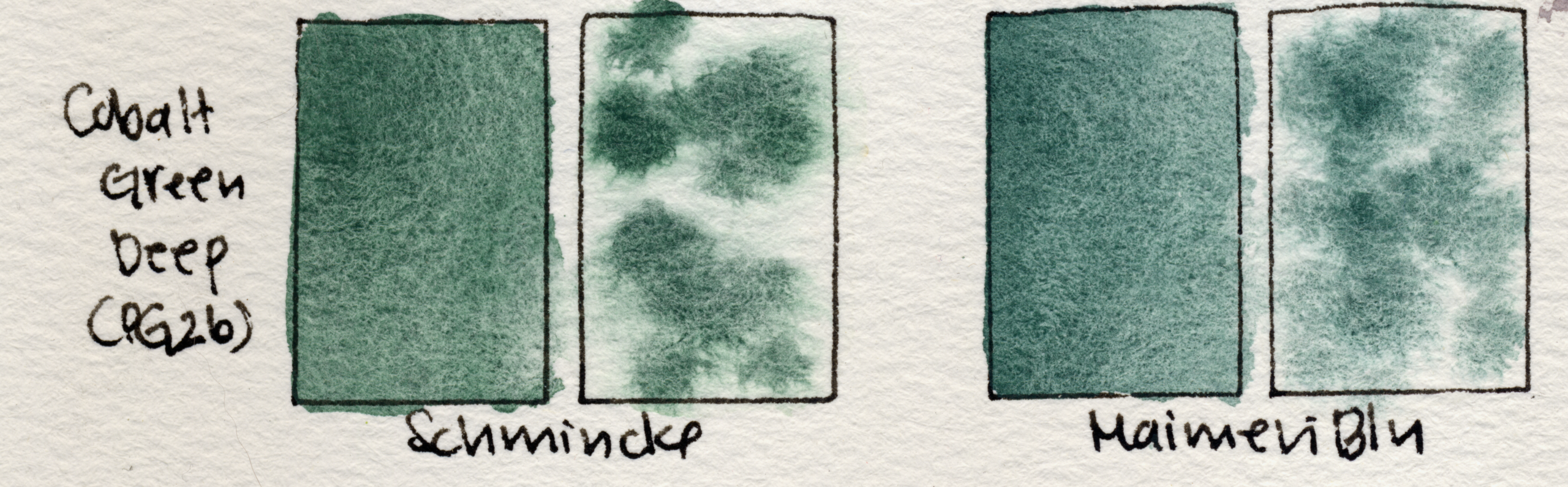
These pigments are:
-
More opaque
-
Heavier-bodied
They create visible texture very easily and are excellent for breaking up large washes.
Best Uses
-
Foliage
-
Grass and vegetation
-
Foreground elements
-
Textural landscape passages
They can add structure and weight to a painting, especially in contrast with smoother passages.
A Limitation: Botanical Painting
Granulating greens are not ideal for every situation.
In botanical or highly controlled painting styles, artists often rely on:
-
Smooth washes
-
Transparent layering
-
Clean edges
Granulating pigments can disrupt this by introducing unwanted texture. For this reason, transparent, non-granulating greens are usually preferred for:
-
Botanical studies
-
Scientific illustration
-
Highly detailed work
Mixing Behavior
One of the most powerful aspects of granulating pigments is how they behave in mixtures.
When mixed with other colors, they can create complex, natural variations rather than flat blends.
For example:
-
With yellow → varied, natural foliage greens
-
With red → complex, muted earth tones
-
With blue → deep, textured shadow greens
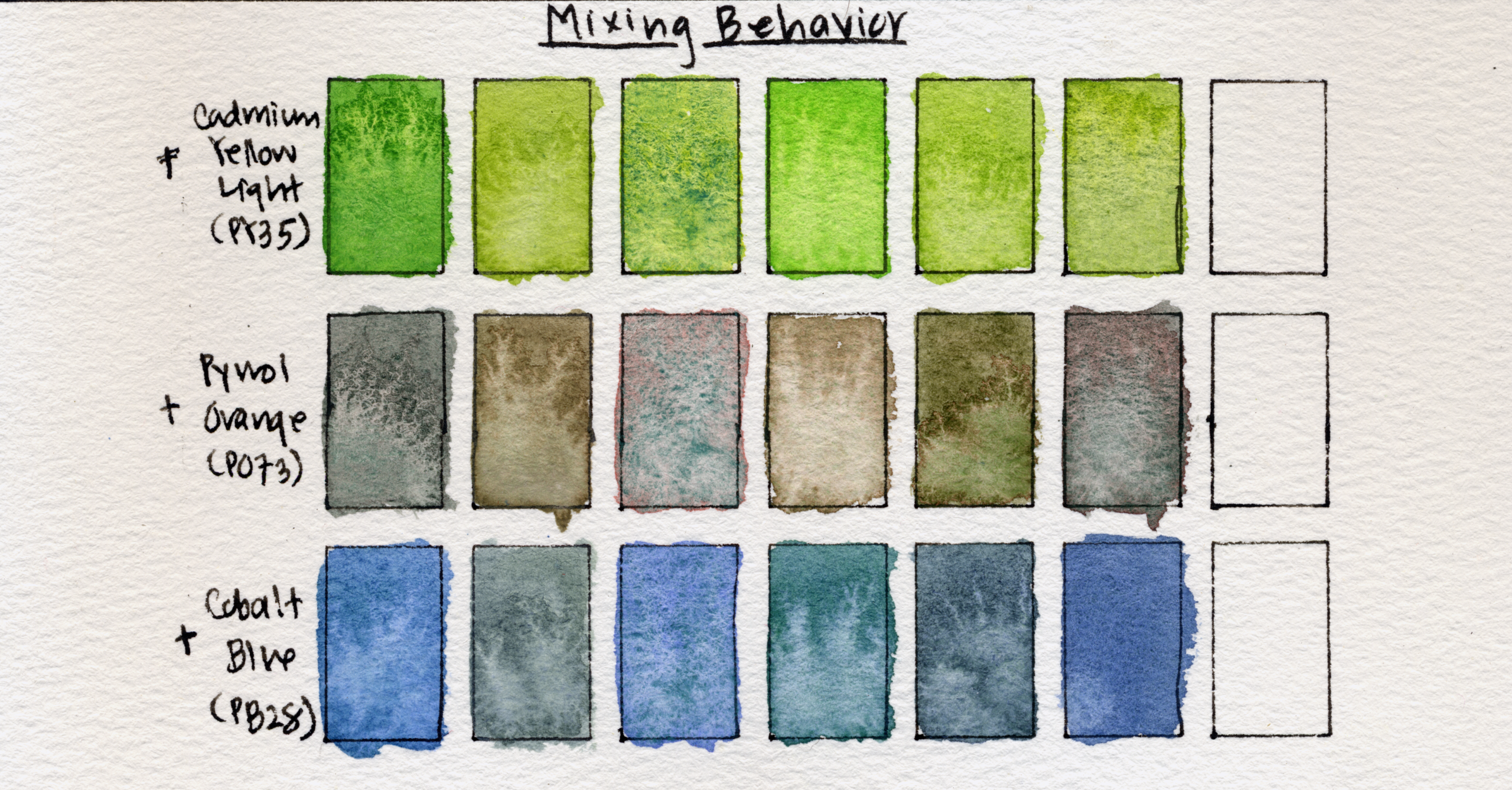
Because different pigments settle at different rates, mixtures can separate slightly, creating optical variation within a single wash. Granulating pigments often produce more interesting neutrals than smooth pigments.
How to Choose the Right Granulating Green
There is no single “best” green.
The right choice depends on how you paint.
Here are a few guiding questions:
1. What Do You Paint?
-
Landscapes → granulating greens are extremely useful
-
Botanicals → transparent greens may be better
-
Portraits → subtle granulators can be helpful
2. Do You Prefer Control or Texture?
-
Smooth, controlled washes → transparent pigments
-
Organic, textured effects → granulating pigments
3. How Strong Do You Want the Effect?
-
Subtle granulation → PG18, PG19
-
Strong granulation → PG17, PG50, PG26
My Recommendation
If I had to choose one granulating green for a limited palette, I would choose:
PG50 — Cobalt Green
It offers:
-
A balanced level of granulation
-
Good versatility in mixing
-
Enough texture without being overwhelming
This makes it a strong all-purpose choice for landscape work and beyond.
It’s also the granulating green I include in my Ultimate Palette.
Final Thoughts
Granulating greens are not essential for every artist, but I do believe they can open up an entirely new way of working for many painters. They allow you to:
-
Suggest detail without painting it
-
Create texture naturally
-
Add complexity to simple washes
Most importantly, they shift your focus from painting every detail to letting the pigment do the work. There is no “best” green — only the one that supports how you paint.
Thank you for joining me in this exploration of granulating greens! Happy painting!